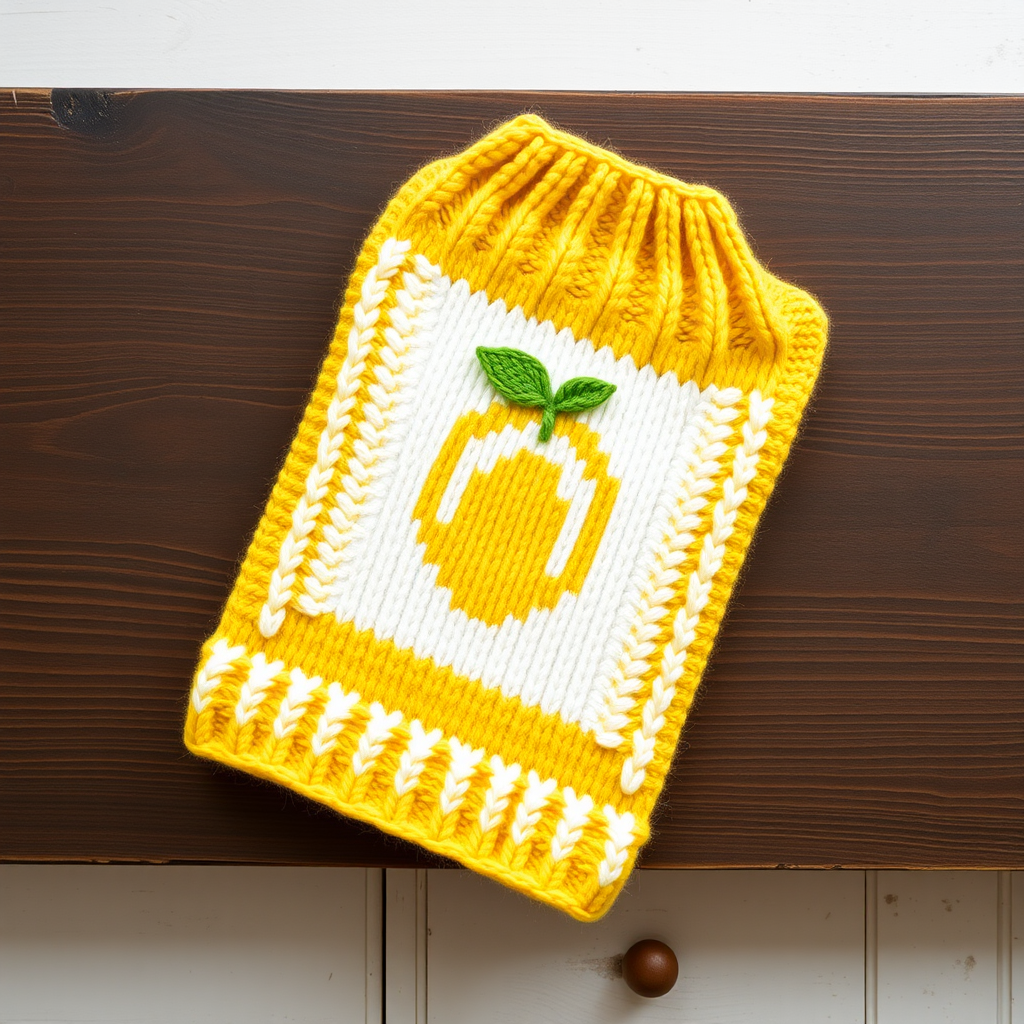
Heritage Harvest Basketweave Kitchen Washcloths Free Pattern – Knit a Rustic Farmhouse Trio

Heritage Harvest Basketweave Kitchen Washcloths – Free Knitting Pattern
Bring the charm of a rustic farmhouse kitchen to your sink with this trio of richly textured basketweave washcloths. Knit in warm, earthy autumnal tones—pumpkin, sage, and cream—these durable cotton cloths are as beautiful as they are practical. Whether you're looking for a thoughtful handmade gift, a quick weekend project, or a way to elevate your daily dishwashing routine, this pattern delivers timeless style with satisfying, tactile knitting.
The basketweave stitch creates a thick, cushioned fabric that's perfect for gentle scrubbing, while the garter stitch border keeps edges neat and prevents curling. Best of all, this pattern is beginner-friendly—if you know how to knit and purl, you can create these stunning washcloths. Let's dive in!
Materials Needed
Before you begin, gather the following supplies. Each washcloth uses approximately 100g of worsted-weight cotton yarn, so you can easily knit all three for a coordinated set or mix and match colors to suit your kitchen décor.
| Item | Specification |
|---|---|
| Yarn | Lion Brand Kitchen Cotton (or any worsted-weight 100% cotton yarn), approx. 100g per cloth in colors: Pumpkin, Sage, and Cream |
| Needles | US 7 (4.5mm) knitting needles |
| Gauge | 20 stitches and 26 rows = 4 inches in basketweave pattern (after blocking) |
| Extras | Tapestry needle for weaving in ends, blocking mat or towel |
Note: 100% cotton yarn is essential for absorbency and durability. Acrylic yarn will not perform as well for kitchen use.
Step-by-Step Instructions
This pattern creates a square washcloth measuring approximately 9x9 inches. Each cloth is worked flat, back and forth in rows. The basketweave pattern is a simple 8-row repeat that creates a thick, textured fabric perfect for scrubbing. Follow along carefully, and you'll have a beautiful, functional washcloth in no time.
Abbreviations
- k = knit
- p = purl
- st(s) = stitch(es)
- rep = repeat
Cast On
Cast on 44 stitches loosely. A loose cast-on is important to prevent the edges from being too tight. If you tend to cast on tightly, consider using a larger needle (US 8) just for the cast-on row, then switch to your US 7 needles for the rest of the pattern.
Border (Rows 1-4)
These first four rows create a smooth garter stitch border that frames the basketweave pattern beautifully.
- Row 1 (RS): Knit all stitches.
- Row 2 (WS): Knit all stitches.
- Row 3 (RS): Knit all stitches.
- Row 4 (WS): Knit all stitches.
Basketweave Pattern (Rows 5-36)
Now we begin the main texture. The basketweave pattern is worked in blocks of 4 stitches. You'll always knit the first 4 and last 4 stitches of every row to maintain the border.
First Repeat (Rows 5-12):
- Row 5 (RS): Knit 4 border stitches, *k4, p4; rep from * to last 4 stitches, knit 4 border stitches.
- Row 6 (WS): Knit 4 border stitches, *k4, p4; rep from * to last 4 stitches, knit 4 border stitches.
- Row 7 (RS): Knit 4 border stitches, *k4, p4; rep from * to last 4 stitches, knit 4 border stitches.
- Row 8 (WS): Knit 4 border stitches, *k4, p4; rep from * to last 4 stitches, knit 4 border stitches.
- Row 9 (RS): Knit 4 border stitches, *p4, k4; rep from * to last 4 stitches, knit 4 border stitches.
- Row 10 (WS): Knit 4 border stitches, *p4, k4; rep from * to last 4 stitches, knit 4 border stitches.
- Row 11 (RS): Knit 4 border stitches, *p4, k4; rep from * to last 4 stitches, knit 4 border stitches.
- Row 12 (WS): Knit 4 border stitches, *p4, k4; rep from * to last 4 stitches, knit 4 border stitches.
Repeat Rows 5-12 three more times (for a total of 32 rows of basketweave pattern). Here's a quick breakdown of how your rows should progress:
- Rows 5-12: First repeat (complete)
- Rows 13-20: Second repeat
- Rows 21-28: Third repeat
- Rows 29-36: Fourth repeat
Pro tip: Place a stitch marker after the 4th stitch and before the last 4 stitches of each row. This will help you keep track of your border stitches without counting every time.
Border (Rows 37-40)
Finish with another garter stitch border to mirror the beginning of the washcloth.
- Row 37 (RS): Knit all stitches.
- Row 38 (WS): Knit all stitches.
- Row 39 (RS): Knit all stitches.
- Row 40 (WS): Knit all stitches.
Bind Off
Bind off all stitches loosely, knitwise on the right side. To bind off loosely, use a needle one size larger (US 8) or simply work your bind-off stitches loosely. A tight bind-off will cause the edge to pucker.
Weave in Ends
Using a tapestry needle, weave in all loose ends on the wrong side of the fabric. Trim any excess yarn carefully.
Finishing and Blocking
Blocking is essential for cotton yarn—it helps even out your stitches and square up the corners. Here's how to do it:
- Fill a basin with cool water and add a drop of mild soap (optional).
- Submerge the washcloth and let it soak for 10-15 minutes.
- Gently squeeze out excess water—do not wring or twist, as this can distort the fabric.
- Lay the washcloth flat on a clean towel and roll it up to remove additional moisture.
- Place the damp washcloth on a blocking mat or dry towel.
- Gently stretch it to a square shape, approximately 9x9 inches.
- Pin the corners if needed and allow to dry completely.
Make the Full Trio
For a coordinated farmhouse set, knit one washcloth in each color: Pumpkin, Sage, and Cream. They make wonderful housewarming gifts, hostess presents, or a lovely treat for your own kitchen. Stack them with a sprig of dried lavender and a ribbon for a beautiful presentation.
These washcloths are also incredibly practical—cotton is naturally absorbent, quick-drying, and gets softer with each wash. The basketweave texture provides gentle exfoliation for scrubbing dishes, wiping counters, or even as a gentle facial cloth.
Happy knitting! We'd love to see your finished washcloths—share your creations and tag them with #HeritageHarvestWashcloths.