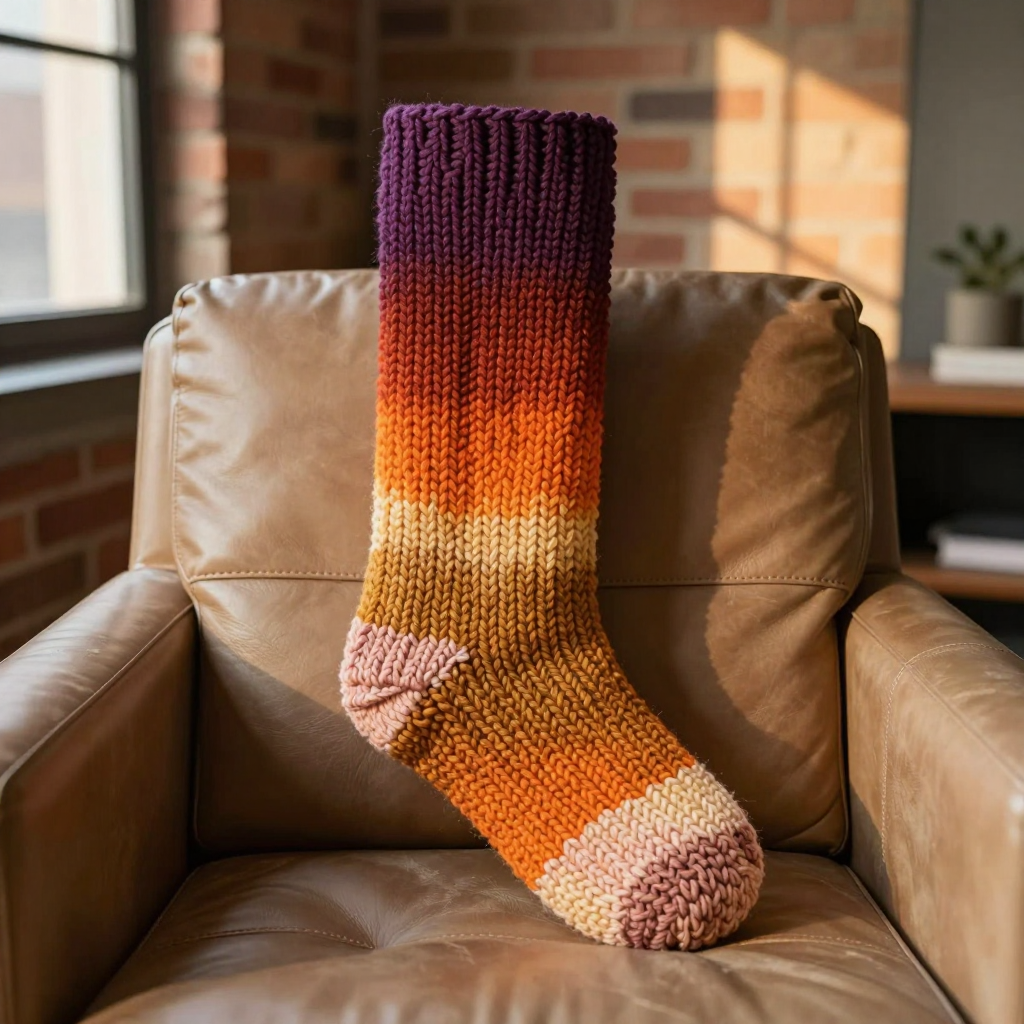
The Teasel & Thistle Wrap: A Free Knitting Pattern for a Textured, Asymmetrical Shawl

Introducing the Teasel & Thistle Wrap
Embrace the wild beauty of the hedgerow with this asymmetrical wrap, featuring a unique teasel-inspired stitch pattern and a soft, gradient color palette. Knit in a cozy worsted-weight yarn, it's the perfect statement piece for autumn walks or cozy evenings by the fire. This free knitting pattern is designed to be approachable for adventurous beginners while offering a satisfying, textured project for experienced knitters. The asymmetrical shape and nubby teasel stitch create a modern, organic look that drapes beautifully.
Materials Needed
Before you begin, gather the following supplies:
- Yarn: Worsted weight yarn (approx. 600-700 yards). Sample uses Malabrigo Rios in 'Dusty' (MC) and 'Teal Feather' (CC). You can use any worsted weight yarn; a gradient or two contrasting colors will enhance the asymmetrical effect.
- Needle: US 8 (5.0 mm) circular needle, 32-inch or longer. The long circular needle is essential to accommodate the increasing number of stitches as the shawl grows.
- Notions: Stitch markers (optional, for pattern repeats), tapestry needle for weaving in ends, blocking pins and mats.
- Gauge: 18 sts and 24 rows = 4 inches in Stockinette stitch, after blocking. Gauge is not critical for this project, but matching it will ensure you use the correct amount of yarn and achieve the intended drape.
Step-by-Step Instructions
Stitch Guide: The Teasel Stitch
This pattern uses a unique stitch pattern that creates a nubby, textured fabric. It is worked over a multiple of 4 + 2 stitches. Practice on a swatch if needed.
- Row 1 (RS): K2, *yo, k2tog, k2; rep from * to end.
- Row 2 (WS): Purl all stitches.
- Row 3: K1, *sl1 wyif, k3; rep from * to last st, k1. (sl1 wyif = slip 1 stitch purlwise with yarn in front)
- Row 4: Purl all stitches.
- Row 5: K1, *k2tog, yo, k2; rep from * to last st, k1.
- Row 6: Purl all stitches.
- Row 7: K1, *k3, sl1 wyif; rep from * to last st, k1.
- Row 8: Purl all stitches.
Getting Started: The Top-Down Asymmetrical Shape
This shawl is worked from the top down, with increases on one side to create an asymmetrical shape. The teasel stitch pattern is a combination of slipped stitches and yarn overs that create a nubby, textured fabric.
Setup
With MC, cast on 3 stitches.
Setup Row (WS): Purl all stitches.
Increase Section
This section builds the initial width of the shawl.
- Row 1 (RS): K1, yo, k to end. (4 sts)
- Row 2 (WS): Purl all stitches.
- Repeat these 2 rows until you have 10 stitches on your needle. You will have completed 7 increase rows (from 3 to 10 sts).
Begin Teasel Pattern with Increases
Now you will incorporate the teasel stitch pattern while continuing to increase on every RS row. The increases are always made by a yarn over immediately after the first stitch.
- Row 1 (RS): K1, yo, work Row 1 of Teasel Stitch across to last st, k1. (11 sts)
- Row 2 (WS): Purl all stitches.
- Row 3: K1, yo, work Row 3 of Teasel Stitch across to last st, k1. (12 sts)
- Row 4: Purl all stitches.
- Row 5: K1, yo, work Row 5 of Teasel Stitch across to last st, k1. (13 sts)
- Row 6: Purl all stitches.
- Row 7: K1, yo, work Row 7 of Teasel Stitch across to last st, k1. (14 sts)
- Row 8: Purl all stitches.
Important: Continue in this manner, increasing 1 stitch on every RS row by working a yarn over after the first stitch. Work the new stitches into the Teasel pattern as they appear. Repeat the 8-row pattern until the shawl measures approximately 60 inches along the longest edge, or desired length, ending with a WS row. The shawl will be asymmetrical, with one side longer than the other.
Decrease Section
Once you reach the desired length, begin decreasing to shape the other end.
- Row 1 (RS): K1, ssk, work in pattern to end. (1 stitch decreased)
- Row 2 (WS): Purl all stitches.
- Repeat these 2 rows until 3 stitches remain.
Finishing
Bind off loosely (use a larger needle or a stretchy bind-off if needed). Weave in all ends with a tapestry needle. Block aggressively by soaking the shawl in lukewarm water, gently squeezing out excess water (do not wring), and pinning it to shape on blocking mats. This will open up the stitch pattern and even out the edges, giving the wrap its beautiful, organic drape.