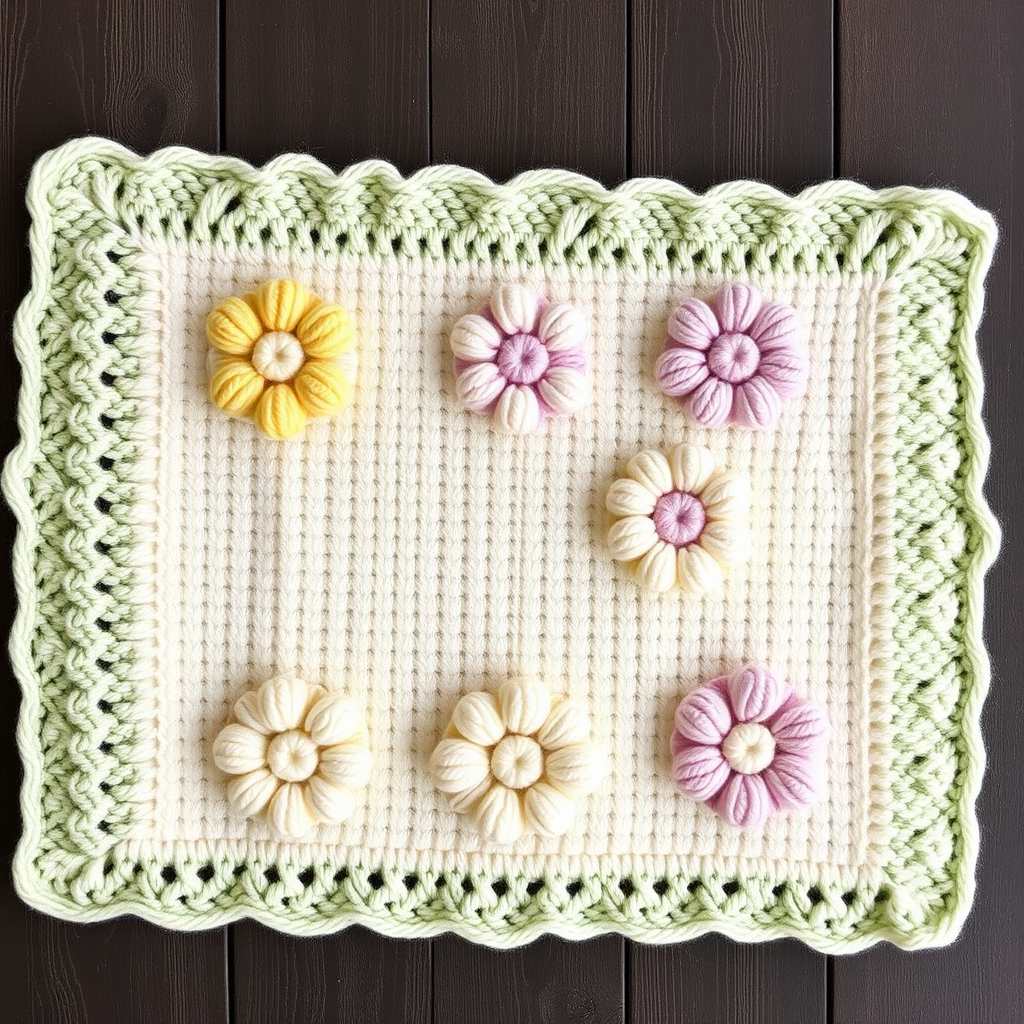
The Coconut Cloud Lace Baby Afghan Free Pattern – A Knitted Breezy Wave Throw

The Coconut Cloud Lace Baby Afghan: A Free Knitted Breezy Wave Throw Pattern
Imagine wrapping your little one in a blanket that feels like a gentle ocean breeze—light, airy, and impossibly soft. The Coconut Cloud Lace Baby Afghan is exactly that: a stunning knitted lace pattern that mimics the sway of coconut palms and the rhythm of gentle waves. This heirloom-quality throw is perfect for warm-weather naps, stroller rides, or as a beautiful decorative piece in the nursery. The open, textured waves create a breathable, dreamy fabric that's as practical as it is gorgeous. Best of all, this free pattern is beginner-friendly, with clear instructions that will guide you through every step. Let's dive in and create something truly special.
Materials Needed
Before you begin, gather these supplies to ensure a smooth knitting experience:
- Yarn: DK weight cotton or cotton-blend yarn in a soft coconut white (approximately 1200 yards). The natural fiber gives the blanket its breathable, drapey quality.
- Needles: US 6 (4.0 mm) circular knitting needles with a 32-inch cable. The long cable accommodates the 152 stitches comfortably.
- Gauge: 20 stitches and 28 rows = 4 inches in stockinette stitch (blocked). Achieving this gauge ensures your blanket matches the finished dimensions.
- Extras: Stitch markers (optional but helpful), tapestry needle for weaving in ends, blocking mats and pins, and a gentle wool wash for finishing.
Pattern Overview
This blanket is worked flat in rows, making it easy to manage even with the lace pattern. The lace repeat is a multiple of 10 + 2 stitches, and the pattern includes a neat garter stitch border on both ends for a polished finish. The key to success is following the lace rows carefully and remembering to slip the first stitch of every row purlwise—this creates a clean selvedge edge that makes seaming and finishing a breeze.
Finished Size
Approximately 30 inches wide by 36 inches long (blocked). Blocking is essential to open up the lace and achieve the correct dimensions, so don't skip this step!
Abbreviations
- CO: Cast on
- K: Knit
- P: Purl
- YO: Yarn over
- K2tog: Knit two together (right-leaning decrease)
- SSK: Slip, slip, knit (left-leaning decrease)
- K3tog: Knit three together (decrease)
- Rep: Repeat
- St(s): Stitch(es)
Step-by-Step Instructions
Step 1: Cast On
Loosely cast on 152 stitches. A loose cast-on is crucial here—if it's too tight, the bottom edge will pucker and prevent the lace from draping beautifully. Use a larger needle for casting on if needed, or try a long-tail cast-on with a relaxed tension.
Step 2: Bottom Border (Garter Stitch)
The garter stitch border frames the lace and prevents curling. Work as follows:
- Row 1: Slip 1 purlwise, knit to end.
- Row 2: Slip 1 purlwise, knit to end.
Repeat these 2 rows until you have worked 6 rows total (which creates 3 garter ridges). This gives you a sturdy, neat foundation for the lace pattern.
Step 3: The Lace Pattern
Now for the fun part! The lace pattern is worked over 16 rows, which you'll repeat until the blanket reaches the desired length. Here's the breakdown:
Row 1 (RS): Slip 1 purlwise, K1, *YO, K2tog, K3, SSK, YO, K1, YO, K2tog, K3, SSK, YO, K1*; rep from * to * across, ending with K1 (last st).
Row 2 (WS): Slip 1 purlwise, Purl to end.
Row 3: Slip 1 purlwise, K1, *K1, YO, K2tog, K1, SSK, YO, K3, YO, K2tog, K1, SSK, YO, K1*; rep from * to * across, ending with K1.
Row 4: Slip 1 purlwise, Purl to end.
Row 5: Slip 1 purlwise, K1, *K2, YO, K2tog, SSK, YO, K5, YO, K2tog, SSK, YO, K2*; rep from * to * across, ending with K1.
Row 6: Slip 1 purlwise, Purl to end.
Row 7: Slip 1 purlwise, K1, *K3, YO, K3tog, YO, K7, YO, K3tog, YO, K3*; rep from * to * across, ending with K1.
Row 8: Slip 1 purlwise, Purl to end.
Row 9: Slip 1 purlwise, K1, *K2, SSK, YO, K1, YO, K2tog, K3, SSK, YO, K1, YO, K2tog, K2*; rep from * to * across, ending with K1.
Row 10: Slip 1 purlwise, Purl to end.
Row 11: Slip 1 purlwise, K1, *K1, SSK, YO, K3, YO, K2tog, K1, SSK, YO, K3, YO, K2tog, K1*; rep from * to * across, ending with K1.
Row 12: Slip 1 purlwise, Purl to end.
Row 13: Slip 1 purlwise, K1, *SSK, YO, K5, YO, K2tog, SSK, YO, K5, YO, K2tog*; rep from * to * across, ending with K1.
Row 14: Slip 1 purlwise, Purl to end.
Row 15: Slip 1 purlwise, K1, *K1, YO, K3tog, YO, K7, YO, K3tog, YO, K1*; rep from * to * across, ending with K1.
Row 16: Slip 1 purlwise, Purl to end.
Repeat Rows 1–16 until the blanket measures approximately 34 inches from the cast-on edge, ending with Row 16. This ensures you finish on a complete pattern repeat, which makes the top border look symmetrical.
Step 4: Top Border (Garter Stitch)
To match the bottom border, work 6 rows of garter stitch:
- Slip 1 purlwise, knit to end.
Repeat this row for a total of 6 rows (3 garter ridges). This frames the lace beautifully and gives the blanket a polished, finished look.
Step 5: Bind Off
Bind off all stitches loosely. If your bind-off tends to be tight, use a larger needle (like a US 8) to ensure the edge remains stretchy and doesn't pull the lace inward. A loose bind-off is essential for maintaining the blanket's drape.
Step 6: Finishing and Blocking
This is the most magical step! Weave in all loose ends with a tapestry needle, being careful to hide them within the fabric. Then, soak the blanket in lukewarm water with a gentle wool wash for 20 minutes. Gently squeeze out excess water—never wring or twist, as this can distort the lace. Lay the blanket flat on a clean towel, roll it up to remove more water, then unroll and shape it to the finished dimensions (30" x 36"). Use blocking pins to stretch out the lace points and scalloped edges. Allow it to dry completely, which may take 24-48 hours depending on humidity.
Tips for Success
- Count your stitches: The lace pattern relies on yarn overs and decreases balancing out. If you find your stitch count off, count after each row to catch mistakes early.
- Use stitch markers: Place a marker every 10 stitches (or at the repeat boundaries) to help you track where you are in the pattern.
- Take breaks: Lace knitting requires focus. Step away if you feel frustrated—the pattern will still be there when you return.
- Trust the blocking: The blanket will look scrunched and uneven before blocking. Don't panic! Blocking transforms the lace and reveals its true beauty.
Why You'll Love This Pattern
The Coconut Cloud Lace Baby Afghan is more than just a blanket—it's a labor of love that will be treasured for generations. The cotton yarn makes it machine-washable (on a gentle cycle) and perfect for sensitive baby skin. The open lace keeps baby warm without overheating, making it ideal for year-round use. And the timeless design means it works beautifully as a nursery decoration, a stroller cover, or a thoughtful handmade gift for a baby shower.
Whether you're a seasoned knitter looking for a relaxing project or a beginner ready to tackle your first lace pattern, this afghan is a rewarding choice. The rhythmic repetition of the lace rows is almost meditative, and the finished result is nothing short of stunning. So grab your yarn, settle into your favorite chair, and let the gentle waves of the Coconut Cloud pattern wash over you. Happy knitting!